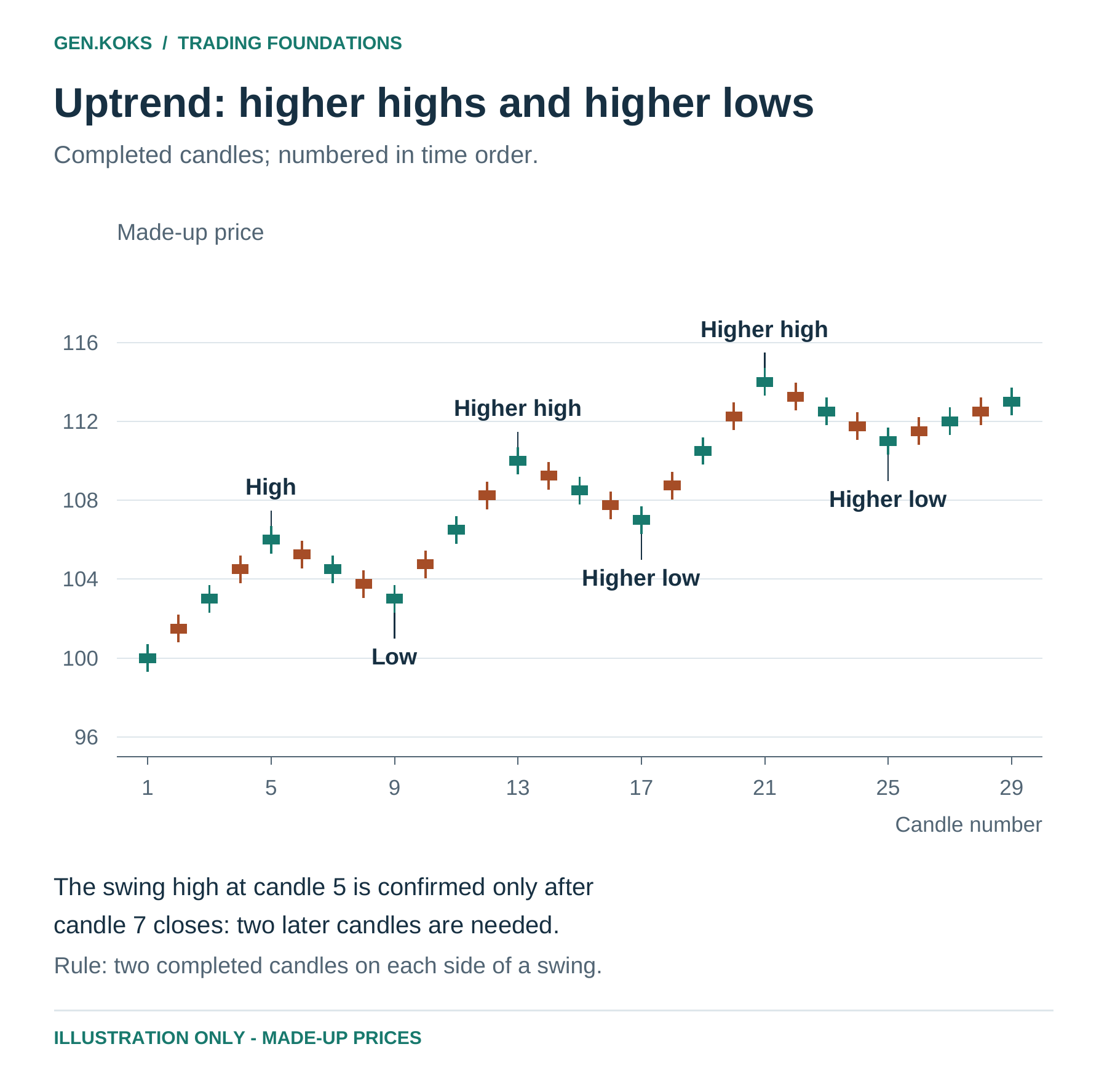
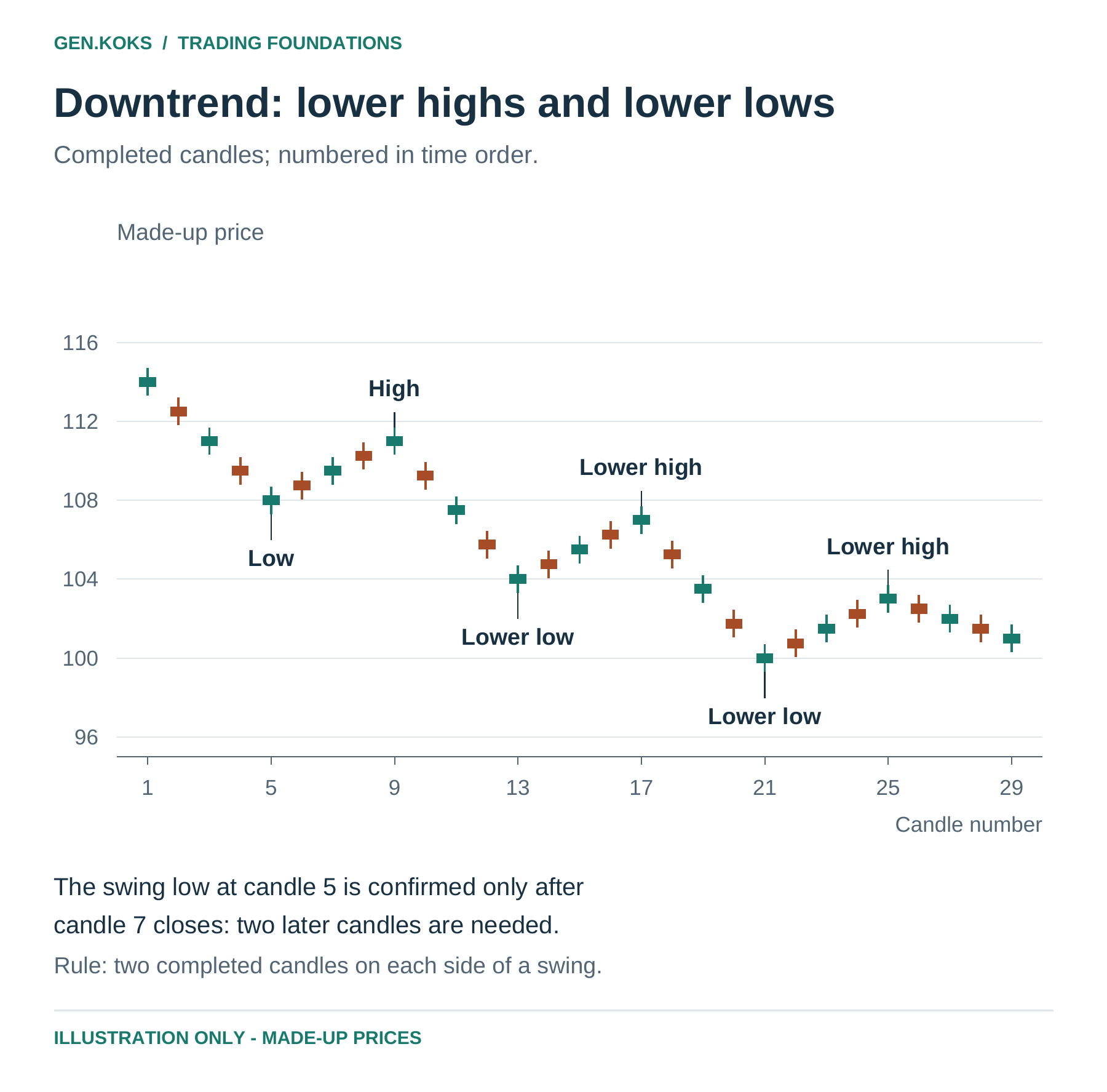
An uptrend commonly forms higher swing highs and higher swing lows. A downtrend commonly forms lower swing highs and lower swing lows.
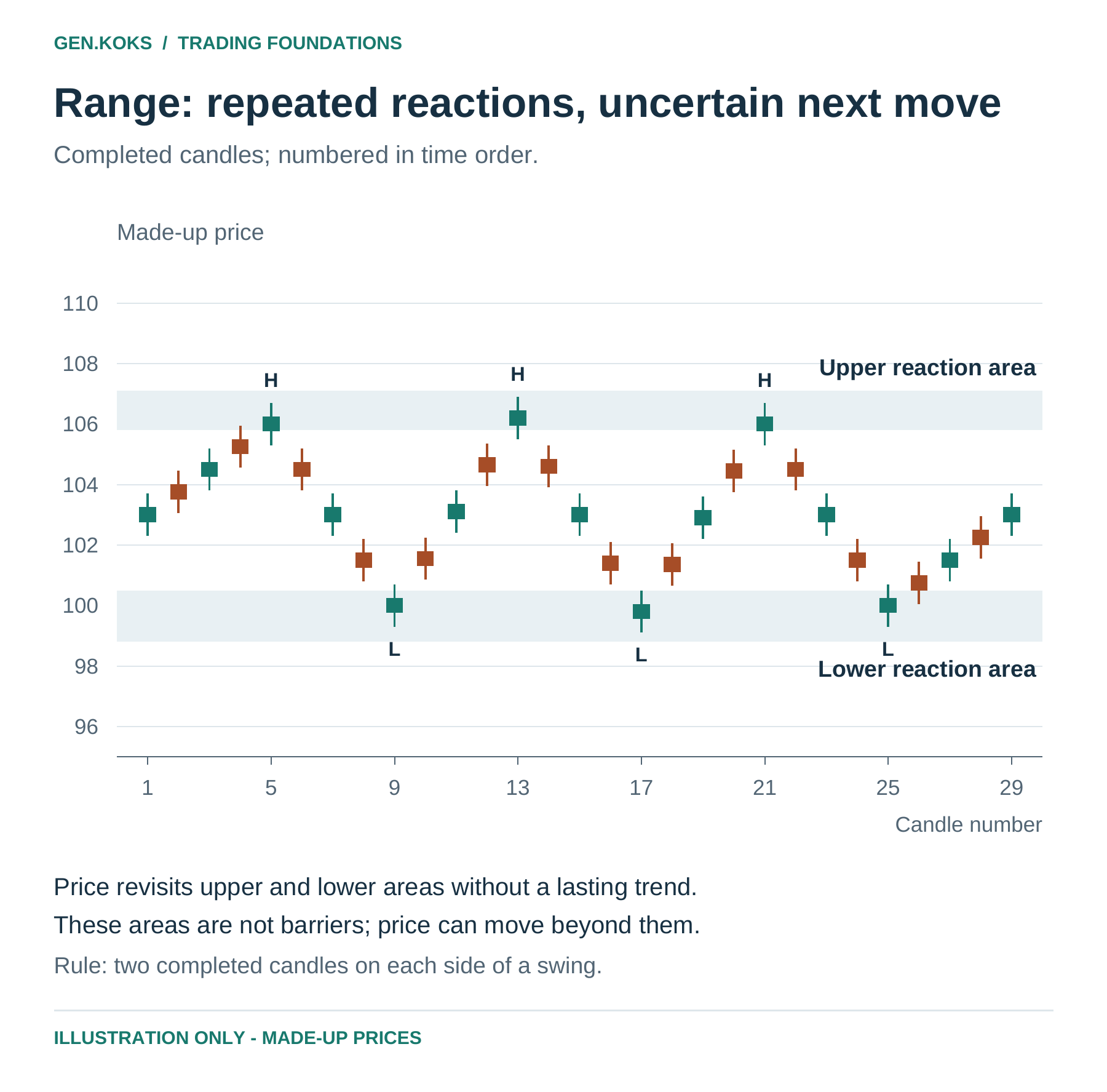
A range occurs when price moves repeatedly between areas without sustained directional progress. Some charts are unclear; you do not need to force a trend label.
For this exercise, identify a swing high when its high is above the highs of the two completed candles on each side. Identify a swing low when its low is below the lows of the two completed candles on each side.
This rule requires later candles for confirmation. You could not have confirmed the swing at the exact moment its highest or lowest price occurred.
Support and resistance are areas where price previously reacted. They are not guaranteed barriers. Price can move through them, and an apparent breakout can fail.
Practical exercise
Using a demo chart:
- Find an example of an uptrend.
- Find an example of a downtrend.
- Find a range or an unclear section.
- Mark the swing points using the rule above.
- Record when each swing became confirmed.
Knowledge check
Write your answers in your learning journal before checking the answer key.
1. Which sequence commonly describes an uptrend?
- A. Higher highs and higher lows.
- B. Lower highs and lower lows.
- C. Identical prices throughout.
2. Does support guarantee that price will rise?
- A. Yes.
- B. No.
- C. Only on daily charts.
3. When should you define your swing-identification rule?
- A. After seeing the result.
- B. Only after a loss.
- C. Before analysing examples.
4. Does our practice swing rule require later candles?
- A. Yes.
- B. No.
- C. Only in downtrends.
5. What should you do when structure is unclear?
- A. Force a trading signal.
- B. Record the uncertainty.
- C. Pretend the chart is trending.
Reveal the answer key
- A — Both swing highs and lows progress upward.
- B — Support can fail.
- C — Consistent rules make comparisons more useful.
- A — Two completed candles on the right provide confirmation.
- B — Recognising uncertainty is part of analysis.